Zona Logo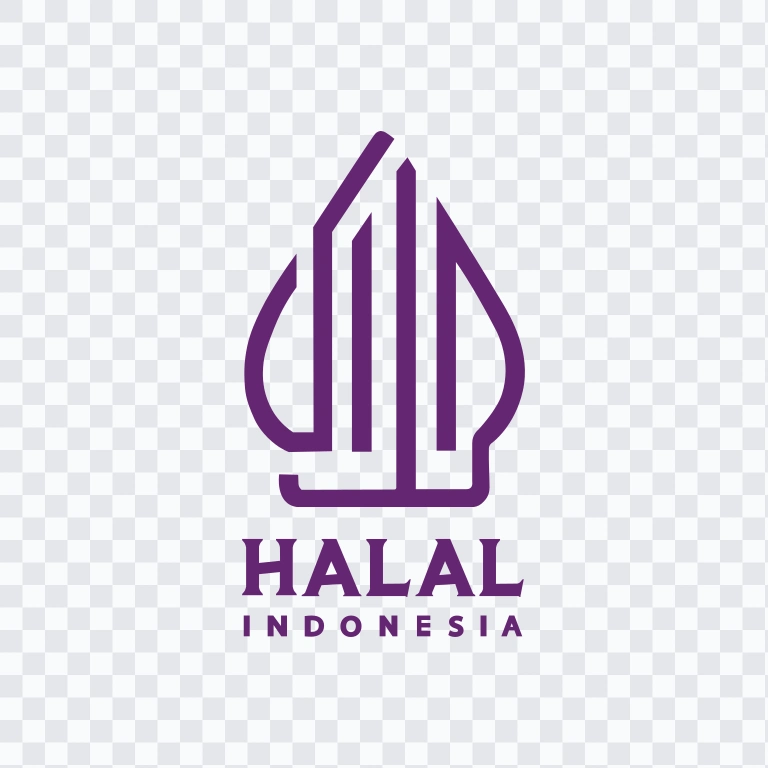
Halal Indonesia
Government Agency
Rated 5.0/5 from 417 votes
Brand Info
Report outdated or incorrect assets.
4+ Halal Indonesia Logo PNG & SVG Vectors HD Quality

Table of Contents11 sections
- Download Halal Indonesia PNG Logo
- About Halal Indonesia
- Meaning and History of the Halal Indonesia Logo
- Evolution of the Logo
- Halal Indonesia Color Palette
- Frequently Asked Questions
- 1) Can I use the Halal Indonesia logo for commercial purposes?
- 2) What file formats are available?
- 3) What does “halal” and “thayyib” mean in the context of this emblem?
- 4) Who designed the official mark?
- 5) How should I place the emblem on packaging and digital interfaces?
Welcome to Zona Logo. You can download the Halal Indonesia logo in PNG and SVG formats. You can also download the PNG logo with a transparent background in high resolution (HD) for free.
Download Halal Indonesia PNG Logo
Please select the file above according to your needs, then press the download button to obtain the desired file:
| File Name | Halal Indonesia |
| File Type | PNG, SVG |
| File Size | 18 KB - 240 KB |
If you encounter issues while downloading the Halal Indonesia logo or if the provided link is inaccessible, you can report it through the Contact Us page.
About Halal Indonesia
Halal Indonesia refers to Indonesia’s national halal ecosystem and, in official contexts, the government-backed framework for halal assurance, certification, and labeling that supports consumers, producers, and international trade. The program is anchored by the country’s halal regulatory regime, which was formalized through the Halal Product Assurance Law (Undang-Undang Jaminan Produk Halal) enacted in 2014 and implemented through the Halal Product Assurance Organizing Agency (BPJPH) under the Ministry of Religious Affairs. Together with accredited Halal Inspection Bodies (LPH) and the Indonesian Ulema Council (MUI) for religious rulings, this framework positions Indonesia as one of the world’s most influential halal markets.
As a government agency category identity, Halal Indonesia is less a single consumer brand and more a trust mark: it signals compliance with halal requirements while encouraging broader values associated with halal and thayyib—permissible and wholesome. In everyday language, halal most commonly relates to food and beverages, but in the regulatory sense it extends to cosmetics, pharmaceuticals, consumer goods, and services when applicable. The concept of thayyib adds an ethical and quality-oriented layer: products are expected not only to be permissible, but also suitable, safe, and beneficial.
Strategically, the identity works in three directions at once: (1) protecting domestic consumers by standardizing marks and oversight, (2) enabling businesses to communicate compliance in a recognizable way, and (3) strengthening Indonesia’s credibility in cross-border trade where halal assurance is a key market access requirement.
Meaning and History of the Halal Indonesia Logo
The official emblem used for halal labeling in Indonesia is designed to be instantly legible at small sizes and resilient across packaging materials, printing methods, and digital use. As a design system, it balances religious semiotics with administrative clarity: a mark must communicate Islamic permissibility while remaining a state-recognized label that can be audited and enforced.
From a design-historical perspective, the mark’s language draws on the long tradition of Arabic calligraphy and geometric containment. Calligraphy functions here not merely as decoration, but as a compact “proof of meaning”—a culturally authoritative script associated with Islamic scholarship. Geometric framing, typically circular, helps the symbol read as an official stamp, mirroring bureaucratic seals used for certification and inspection.
In interpretive terms, the emblem communicates several cues at once:
- Legitimacy: stamp-like construction suggests verification and traceability.
- Clarity: high-contrast forms support quick recognition on crowded labels.
- Universality: minimal reliance on long text makes the mark usable across languages and regions.
- Ethical intent: the underlying notion of halal paired with thayyib frames the label as more than permissibility—also quality and care.
Users often search for downloadable assets such as the Halal Indonesia logo for compliance-related mockups, packaging concepts, educational materials, or UI labels. When you need a clean digital master, requests like Halal Indonesia PNG or Halal Indonesia SVG typically indicate a need for either a transparent background raster file or a scalable vector format suitable for print and responsive interfaces.
Evolution of the Logo
Halal labeling in Indonesia has evolved alongside governance changes. Earlier eras relied on marks associated with established religious authority and food oversight practices. As national halal assurance became codified through the 2014 law and subsequent implementation structures, the identity system moved toward a more standardized, state-administered model—one that could be consistently applied across industries and supported by digital verification workflows.
In practical branding terms, this “evolution” tends to appear in four areas:
- Standardization of proportions: clearer construction rules to prevent distortion on packaging.
- Improved small-size performance: simplified details for legibility on caps, sachets, and small labels.
- System compatibility: readiness for databases, QR-driven verification, and multi-platform publishing.
- Governance alignment: consistent application to reflect the roles of BPJPH, LPH, and MUI within the assurance process.
Because it functions as an official seal rather than a marketing logo, updates prioritize compliance and reproducibility over trend-driven aesthetics. This helps maintain continuity—critical for a trust mark that consumers must recognize instantly.
Halal Indonesia Color Palette
No official brand color hex codes were provided in the source brief, and public usage can vary depending on printing constraints and medium (ink, embossing, monochrome packaging, or digital UI). For certification marks, monochrome implementations are common to preserve consistency across substrates and to avoid color shifts that could reduce legibility.
If you are building a design system that references the emblem, a practical approach is to support these implementation modes:
- Primary: Black (#000000) on light backgrounds for maximum contrast.
- Reverse: White (#FFFFFF) on dark backgrounds for accessibility in UI and packaging.
- Single-ink variant: One spot color aligned to packaging constraints (brand-controlled), keeping the symbol intact.
Note: For regulatory labels, do not “brand-color” the seal unless the applicable guidelines explicitly allow it. Treat it as an official emblem, not a decorative element.
Frequently Asked Questions
1) Can I use the Halal Indonesia logo for commercial purposes?
Because this is an official certification/assurance mark tied to regulation, you should seek permission and follow the applicable usage rules from the relevant authorities (such as BPJPH and associated guideline documents). When in doubt, request written clarification before placing it on products, ads, or packaging.
2) What file formats are available?
On Zona Logo, the downloadable assets are provided in PNG and SVG formats, covering both raster needs (quick previews, documents) and vector needs (print, responsive scaling).
3) What does “halal” and “thayyib” mean in the context of this emblem?
Halal means permissible under Islamic law, while thayyib emphasizes wholesomeness—quality, safety, and suitability for consumption or use. The emblem is commonly understood as a visual assurance that products meet halal requirements, with thayyib often implied as a broader ethical and health-oriented expectation.
4) Who designed the official mark?
Official certification marks are typically developed through institutional processes rather than credited to a single public-facing designer. Documentation tends to focus on governance, specification, and correct application. If you need authoritative attribution, consult official releases or guideline PDFs issued by the responsible institutions.
5) How should I place the emblem on packaging and digital interfaces?
Use a high-contrast version, keep clear space around the symbol, avoid adding effects (shadows, gradients), and do not redraw or modify proportions. For digital products, prefer a vector format to ensure crisp rendering; for documents and quick mockups, a transparent-background raster file is typically sufficient.
AI-Generated Content
This description was generated by AI and may contain inaccuracies.