Zona Logo
Codex
AI Developer Tools
Rated 5.0/5 from 1,736 votes
Brand Info
Report outdated or incorrect assets.
6+ Codex Logo PNG & SVG Vectors HD Quality

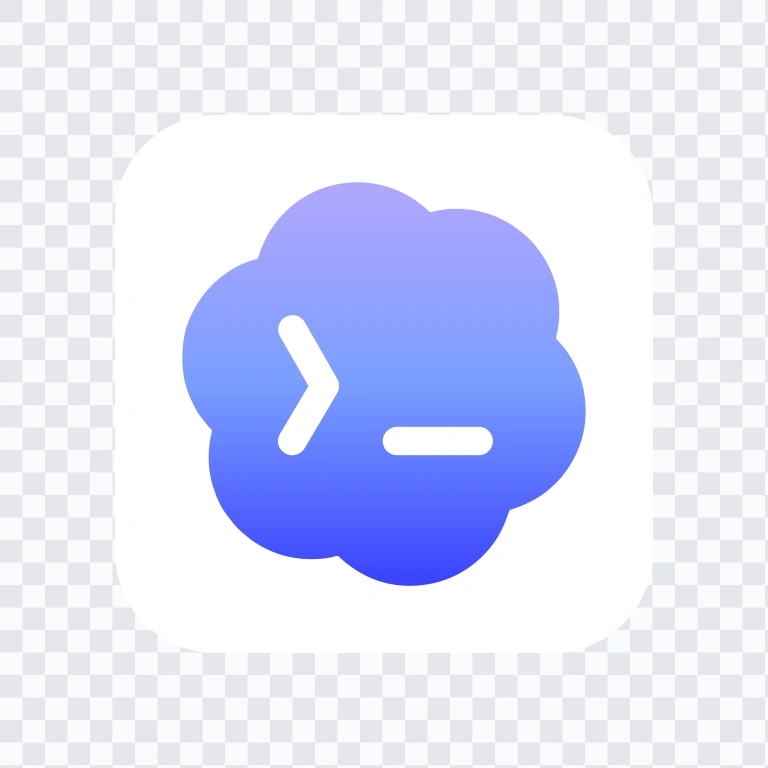


Table of Contents11 sections
- Download Codex PNG Logo
- About Codex
- Meaning and History of the Codex Logo
- Evolution of the Logo
- Codex Color Palette
- Frequently Asked Questions
- 1. Can I use the Codex logo for commercial purposes?
- 2. What file formats are available?
- 3. What does Codex do?
- 4. Where can Codex be accessed?
- 5. Did Codex expand beyond coding assistance?
Welcome to Zona Logo. You can download the Codex logo in PNG and SVG formats. You can also download the PNG logo with a transparent background in high resolution (HD) for free.
For users searching for a clear brand overview alongside downloadable assets, this profile explains what Codex is, how the product is positioned in the artificial intelligence market, and how its visual identity can be understood from a branding perspective. If you are looking for a Codex PNG, Codex SVG, or a quick guide to the Codex logo, the sections below bring together practical download information with a careful, fact-based brand summary.
Download Codex PNG Logo
Please select the file above according to your needs, then press the download button to obtain the desired file:
| File Name | Codex |
| File Type | PNG, SVG |
| File Size | 18 KB - 220 KB |
If you encounter issues while downloading the Codex logo or if the provided link is inaccessible, you can report it through the Contact Us page.
About Codex
Codex is an AI coding agent developed by OpenAI and integrated with ChatGPT. It was launched as a research preview in May 2025 and was introduced as a tool built to handle software engineering tasks autonomously in a cloud environment before returning results for human review. Based on the provided description, its core use cases include writing features, fixing bugs, and reviewing codebases, making it part of a fast-growing class of agentic tools designed to support developers across different stages of software work.
The product is available through ChatGPT's web app, a command-line interface, a desktop app for Windows and macOS, and several IDE integrations. This multi-surface availability is important for understanding the brand: it positions the service not as a single-purpose experiment but as a workflow-oriented system designed to meet users where they already build and review code. Press coverage described it as OpenAI's entry into a competitive market for AI coding tools, where it competes with products such as Anthropic's Claude Code and Cursor.
OpenAI also expanded the broader platform concept with Codex Security, an application-security agent introduced in March 2026 to identify and propose fixes for software vulnerabilities. By that same point, OpenAI reported that the product had grown to more than 2 million weekly active users and was positioning it as a broader enterprise agent platform that could eventually extend beyond software development. From a brand strategy perspective, that combination of coding utility, security support, and enterprise ambition suggests a visual identity that should communicate trust, clarity, technical competence, and controlled autonomy.
Meaning and History of the Codex Logo
No official design brief, symbol explanation, font specification, or brand color system was provided in the source material, so any interpretation of the official emblem must remain cautious. Still, the name itself carries strong semiotic weight. “Codex” evokes structure, encoded knowledge, and systems of organization, all of which align naturally with software engineering and AI-assisted development. In branding terms, that makes the name unusually effective: it feels technical without being cold and intellectual without becoming abstract.
Without verified visual specifications, the safest way to analyze the brand symbol is to focus on likely identity principles rather than unsupported details. For a product centered on autonomous engineering tasks in a cloud environment, the most effective visual identity would typically emphasize precision, modularity, and legibility across interfaces such as web dashboards, desktop applications, command-line contexts, and IDE integrations. Any successful Codex logo would therefore need to work well at small sizes, remain readable in monochrome, and translate cleanly into vector format for product, marketing, and documentation use.
Users often search for a Codex PNG or scalable artwork because software brands depend heavily on interface consistency. In that context, an effective mark is not only decorative; it acts as a shorthand for reliability, reviewability, and machine-assisted execution under human oversight. Those are meaningful associations for a tool that performs tasks independently and then returns output for human review.
From a brand-history standpoint, the strongest confirmed identity element is not a visual motif but the product promise: autonomous software engineering assistance delivered within the OpenAI and ChatGPT ecosystem.
Evolution of the Logo
The available source does not document a formal rebrand, logo redesign, or sequence of identity updates. What can be stated with confidence is that the product was launched as a research preview in May 2025 and later expanded with Codex Security. That progression matters because brand evolution does not always begin with a visible logo change; it can also emerge through product architecture, audience expansion, and category positioning.
In its initial phase, the brand was tied closely to coding assistance. As the platform expanded into security and was described as a broader enterprise agent platform, the identity context widened as well. In practical terms, that kind of evolution often pushes a brand toward a more flexible system, one that can represent multiple functions while remaining recognizable across different applications and integration points. Even without documented changes to the wordmark or symbol, the brand story clearly evolved from a research-preview coding assistant toward a larger enterprise-oriented AI agent proposition.
If you are searching for the official emblem in a transparent background or vector format, it is best to compare files carefully and rely on trusted sources, especially because no verified rebrand timeline is included in the supplied facts.
Codex Color Palette
No official brand colors or hex codes were provided in the source material. Because of the anti-hallucination requirement, it would be inaccurate to invent a palette or assign unsupported color values. If an official style guide becomes publicly available, this section could be updated with exact specifications for digital and print use.
- Official primary colors: Not publicly available in the provided information.
- Hex codes: Unknown.
- Recommended usage note: Use only verified assets when consistency is important across websites, presentations, or app interfaces.
From a general design standpoint, AI and developer-focused brands often benefit from restrained, high-contrast palettes because they support readability and interface clarity. However, that is only a broad branding observation and should not be mistaken for an official Codex color standard.
Frequently Asked Questions
1. Can I use the Codex logo for commercial purposes?
You should seek official permission before using the brand symbol for commercial purposes. Trademark and usage rights are not provided in the source material.
2. What file formats are available?
The downloadable files referenced here are available in PNG and SVG formats.
3. What does Codex do?
Codex is an AI coding agent developed by OpenAI and integrated with ChatGPT. It is designed to handle software engineering tasks such as writing features, fixing bugs, and reviewing codebases autonomously in a cloud environment before returning results for human review.
4. Where can Codex be accessed?
According to the provided description, it is available through ChatGPT's web app, a command-line interface, a desktop app for Windows and macOS, and several IDE integrations.
5. Did Codex expand beyond coding assistance?
Yes. OpenAI introduced Codex Security, an application-security agent designed to identify and propose fixes for software vulnerabilities, and also positioned the broader product direction as an enterprise agent platform that could eventually be used for tasks beyond software development.
AI-Generated Content
This description was generated by AI and may contain inaccuracies.