Zona Logo
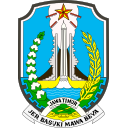
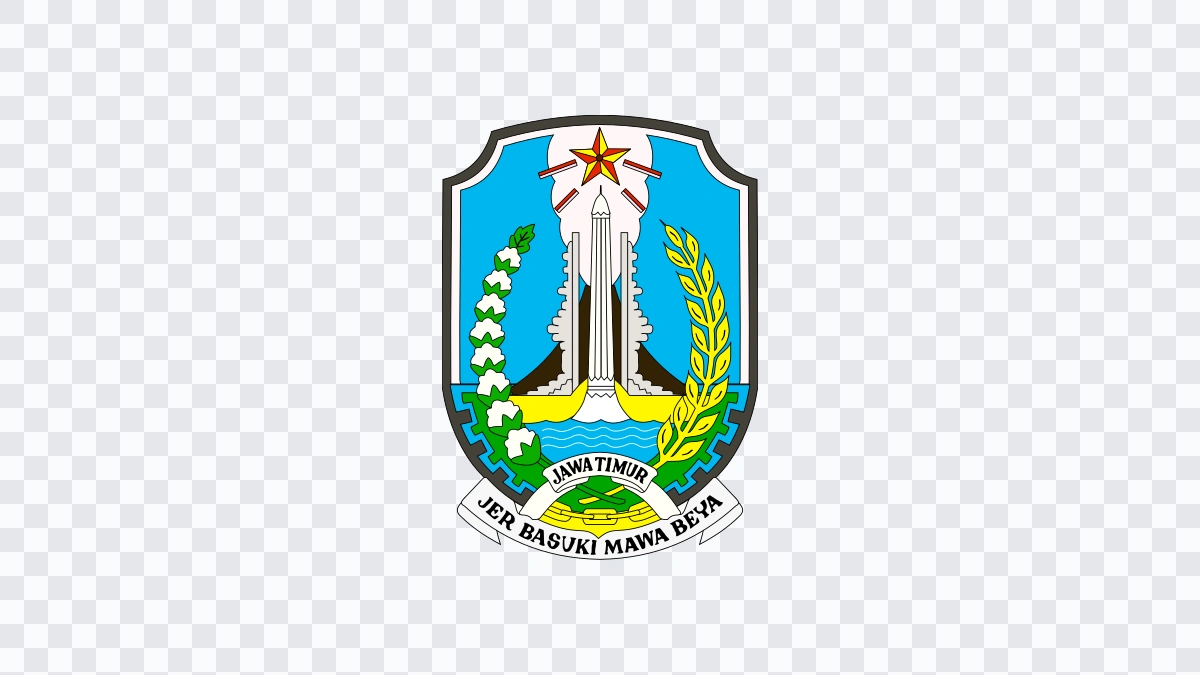
Coat of Arms of East Java Province
East Java, Indonesia503317
Coat of Arms of East Java Province
Download SVG
Download PNG
Preview failed to load. Please try again.
File Information
- Also known as
- JATIM
- Formats
- SVG, PNG
- Last updated
- Sep 7, 2026
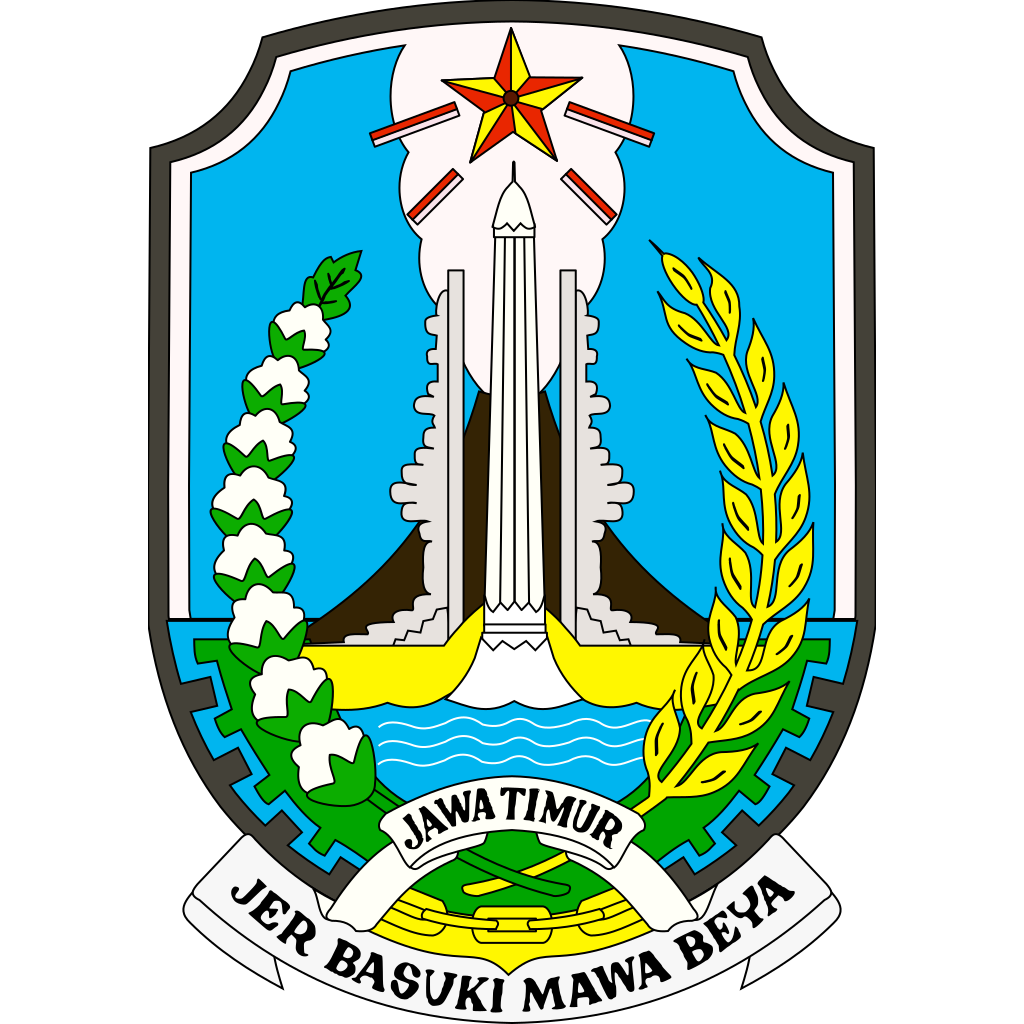
The East Java Province coat of arms consists of a shield with a pentagonal base containing a golden-yellow star, the Tugu Pahlawan, a volcano, a temple gate, rice fields and farmland, a wavy river, rice and cotton, a wheel and chain, and a ribbon bearing the regional name and motto.
- Pentagonal shield and star: The shield symbolizes security, peace, and honesty. The five-pointed golden-yellow star with five rays symbolizes belief in the One Almighty God and the philosophy of Pancasila.
- Tugu Pahlawan: This monument depicts the heroic character and spirit of the people of East Java in defending sovereignty and the territory of the homeland.
- Volcano and temple gate: The volcano symbolizes a firm and dynamic determination to create a just and prosperous society. The temple gate symbolizes East Java’s past ideals and grandeur, together with a continuing spirit of struggle.
- Fields and river: The rice fields, farmland, and wavy river depict sources of prosperity, while the agricultural setting reflects the province’s productive resources.
- Rice and cotton: The 17 grains of rice and eight cotton bolls symbolize food and clothing needs and, with other emblem elements, refer to Indonesia’s Proclamation of Independence on August 17, 1945.
- Wheel and chain: These elements depict industrial development, strong determination, and bonds of friendship toward newcomers.
- Ribbon inscription: The ribbon carries “Jawa Timur” as the regional name and “Jer Basuki Mawa Beya” as the motto, expressing that happiness or success requires sacrifice, hard work, and effort.
The use of the East Java Province coat of arms was established by East Java Provincial Regulation No. 3 of 1966 and later refined by Regulations No. 7 of 1973 and No. 3 of 1974. The 1974 change added “Jer Basuki Mawa Beya” as the motto.
National Symbols
Explore the national emblem and flag for this subdivision.

Is this emblem outdated or incorrect?